How to start a mahjong club at a senior community
Choosing a version, buying sets, teaching beginners four at a time and setting a schedule that keeps a mahjong club going.
By the Home Happenings team · October 14, 2026
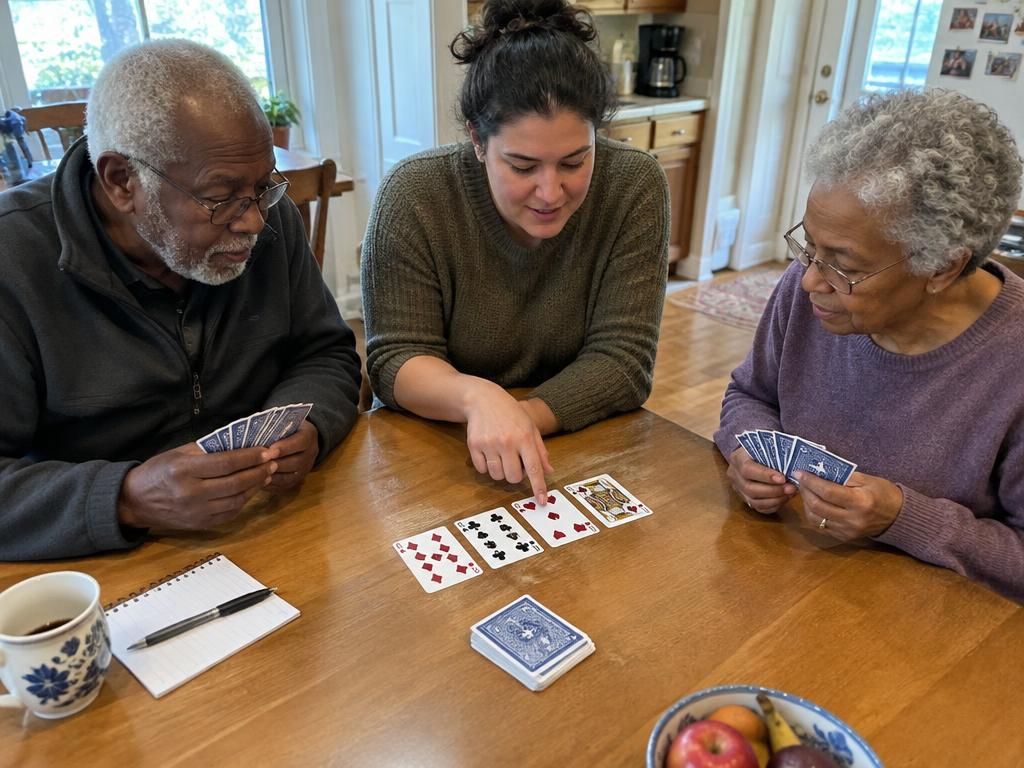
Mahjong has a way of filling a room. Once four people learn it, they tend to want a fifth table, a regular time and a group chat. For an activity director, that is the dream: a program residents run themselves after a few weeks of help.
Getting there takes a little planning. This guide walks through how to start a mahjong club at a senior community, from buying sets to teaching beginners four at a time to keeping the schedule steady once the excitement settles.
Decide which mahjong you are teaching
Before you buy anything, pick a version. In New Jersey, most people who grew up with the game played American mahjong, the version that uses a card of winning hands published each year by the National Mah Jongg League. Others learned Chinese or Hong Kong style, which has no card and different scoring.
Ask around before you commit. A short note in the newsletter or a sign-up sheet at the front desk usually turns up two or three residents who already play. Their version is often the right one to start with, because they become your table captains later.
If nobody has a strong preference, American mahjong is a sensible default here. Residents' friends and grandchildren are more likely to know it, and the yearly card gives the club a natural reason to regroup every spring.
What you need to buy
A starter setup for one table is modest. For American mahjong you need:
- One complete set, which includes the jokers that American play uses. Check the tile count on the box before ordering, since sets sold for other styles may not include them.
- Four racks with pushers, so players can hold and move their tiles without fumbling.
- Current cards from the National Mah Jongg League, one per player. Large print versions are available and worth it for most groups.
- A square table with a cloth or felt cover to quiet the tiles. Card tables work fine.
- Dice and a few bettor chips or tokens if your residents like to keep score.
Buy one set for every four people you expect, plus one spare. Tiles go missing, and a fifth table appears faster than you think. Larger tiles with clear printing are easier on the eyes and on arthritic fingers, so it is worth paying a little more for them.
Teach four at a time
Mahjong is hard to teach from the front of a room. Every player has a different hand, and the questions are specific: can I call this tile, does this count as a pung, why can't I use a joker here. A teacher can really only help one table at once.
So plan the first sessions around tables of four, not a lecture. A setup that works well:
- Session one: the tiles, the suits, the honors and the jokers. Build sample hands face up so everyone can see.
- Session two: the deal, the Charleston (the passing of tiles that starts each American game) and how to read the card.
- Session three: open hands, calling tiles and declaring mahjong. Play slowly with everyone's tiles visible.
- Session four: a real game, with the teacher circling the table and pausing to explain decisions.
By the fourth week, most groups can play without help, at least slowly. That is the point when your experienced residents can take over as table captains, and when you can open a second beginner table.
If you have more than eight interested residents, run two beginner groups on different days rather than one crowded session. Beginners lose confidence quickly when the teacher is always at someone else's table.
Who teaches the first sessions
Residents who already play are a gift, but they are not always patient teachers, and they may not want the responsibility. An outside instructor for the first month gives the club a strong start and takes the pressure off everyone.
Home Happenings pros who teach mahjong can come to your community for those first sessions. They bring the game, the know-how and a plan for taking a table of beginners to a real game. You can read how our board and card games lessons work on the card games activity page, and set up a group class through our senior communities page.
Set a schedule and protect it
Clubs fade when the time moves around. Pick a day and a time and keep it, even when attendance dips.
A few things that tend to help:
- Afternoons work better than mornings for most groups. Two to two and a half hours gives time for a couple of full games.
- Hold the same room each week. Good light matters more than you expect, since tiles are small.
- Post a table list. A simple sign-up sheet by table keeps foursomes even and lets residents see where the open seats are.
- Keep a short wait list. When someone misses a week, a substitute can step in so the table can still play.
- Mark the new card each spring. Ordering cards, learning the new hands together and maybe a small tournament make a good yearly tradition.
Make room for different skill levels
After a few months, the club will split into players who want a fast, serious game and players who are still learning. That is healthy. Give them separate tables, or separate days, so nobody feels rushed or held back.
Some residents will want to play but cannot sit for a full afternoon, or cannot easily get down to the activity room. A shorter beginner session, or a table set up in a smaller lounge closer to the apartments, can bring them in.
For residents who want more
Some players get hooked and want extra practice. If a resident's family asks, one-on-one or small group lessons at home are another option. On Home Happenings, families can book a pro to teach mahjong at a parent's home, as long as the parent has four players at the table, and those bookings run for at least four visits so the group can actually learn the game. It is a nice complement to the club, not a replacement for it.
Getting started this month
The simplest version of all this: find your existing players, buy one or two sets, pick a day and bring someone in to teach four beginners at a time for a month. Most communities have a working club by the second month.
If you would like help with those first sessions, tell us a little about your group on the senior communities page, or read more about how Home Happenings works. We are happy to talk it through, even if you are still deciding which version to play.
Related activities
Find a local pro
Checked and vetted professionals who teach at home across Essex County.
Browse professionals