Mahjong, bridge and canasta: why card games are good for the brain
Card and tile games keep older adults thinking, talking and laughing. Here is what the research suggests, and how to get a game going at home.
By the Home Happenings team · October 1, 2026
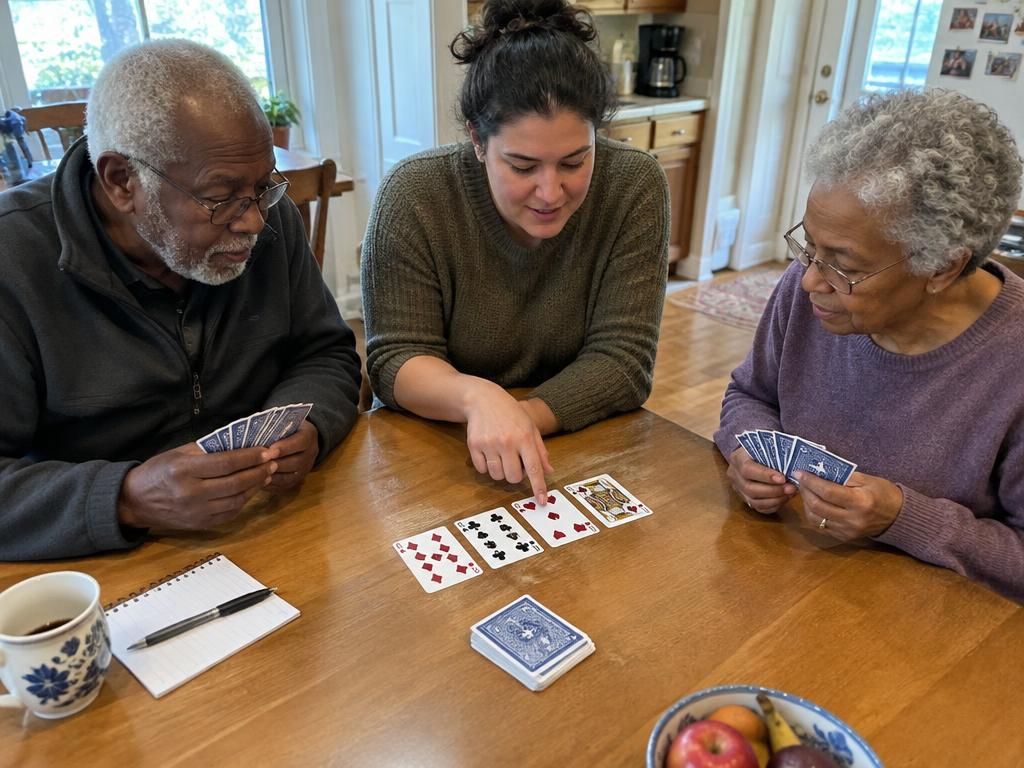
Walk into almost any kitchen in Essex County where someone over seventy lives and there is a good chance you will find a deck of cards in a drawer. For a lot of families, cards and tiles were the social glue of a generation: Tuesday mahjong, Friday bridge, canasta after Sunday dinner. When friends move away or a group stops meeting, that game is often one of the first things a person loses and one of the things they miss most.
The good news is that these games are easy to bring back, and there are real reasons to want to.
What the research suggests
We want to be careful here, because there is a lot of overstated advice out there. No game prevents memory loss, and nobody should promise that it does. What researchers have found, in a number of studies of older adults, is that people who regularly do mentally engaging leisure activities, including card games, board games and puzzles, tend to keep sharper thinking skills over time than people who do not. Studies also consistently link regular social contact with better wellbeing as we age.
Card games happen to combine both. You are counting, remembering what has been played, planning a few moves ahead and reading other people, all while talking and laughing around a table. That mix is hard to get from a crossword alone.
If you have questions about memory or thinking for a specific person, that is a conversation for their doctor. For everyone else, a weekly game is simply a good habit with very little downside.
Mahjong
Mahjong is a tile game for four players, with deep roots in China and a long history in Jewish American communities, where the American version with its yearly card took off. A game involves building a wall of tiles, drawing and discarding, and assembling a winning hand from a list of patterns.
Why people love it: the click of the tiles, the rhythm of the Charleston, and the fact that luck and skill both matter, so a beginner can win a hand in the first week.
What you need: four players, a card table, and a set of tiles with racks. On Home Happenings, the household sets up the table and the players, and the pro brings the game. Mahjong is booked as at least four visits, either four weeks at the same time, every week, or four dates you pick, so the group can genuinely learn.
Bridge
Bridge is a trick taking card game for four players in two partnerships. It has two parts: the bidding, where partners describe their hands in a kind of code, and the play. It is famously deep. People play for sixty years and still learn something.
Why people love it: the partnership. A good bridge pair builds an almost wordless understanding, and the conversation after each hand is half the fun.
What you need: four players, though a teacher can fill a seat, and two decks. Many people learned bridge decades ago and stopped. The basics come back faster than you would think with a patient teacher and open hands on the table.
Canasta
Canasta is a rummy style game usually played by four people in partnerships, with two decks and wild cards. Players build melds of the same rank, aiming for canastas of seven cards.
Why people love it: it is lively, forgiving and social. You can talk through the whole game, and there are big satisfying moments when a canasta comes together.
What you need: four players, two decks and a score pad. Like mahjong, canasta on Home Happenings needs four players, with the household setting up the table and the pro bringing the game, and it is booked as at least four visits.
And chess
Chess is a different animal: two players, no luck, and as much depth as you want. For many older adults, especially men who played for years with a friend or a brother, what they miss is simply having an opponent. A weekly chess visit is often less a lesson and more someone to play a real game with, every week. Some pros do teach, and will go over a key moment after the game if you want them to.
How to get a game going at home
- Find the players. Mahjong, bridge and canasta all want four. Think neighbors, a sister, two friends from the building, or a grandchild home for the summer.
- Set up a real table. A card table with good light and comfortable chairs makes a big difference. Put snacks within reach.
- Pick a fixed time. The same day and hour each week turns a game into a ritual.
- Get someone to teach. A good teacher keeps the first visits slow and patient, plays open hands so everyone can see, and leaves a cheat sheet behind.
- Expect to laugh. Nobody is good on day one. That is half the fun.
You can find local teachers who play all four games on the board and card games page, and filter by Mahjong, Bridge, Canasta or Chess when you browse professionals. If you are in a particular town, the town pages list who serves it, including Livingston, Bloomfield and Millburn.
A note for adult kids
If your parent used to play and stopped, try asking about the game itself, not about whether they are lonely. "Do you still remember how to bid?" opens a much nicer conversation than "You need to get out more." More often than not, the stories about old games come pouring out, and that is a good sign you have found the right gift.
A deck of cards costs almost nothing. A regular table of four, laughing at the same time each week, is worth a great deal.
Related activities
Find a local pro
Checked and vetted professionals who teach at home across Essex County.
Browse professionals