Personal training at home after 70: what to expect
What an in-home trainer actually does with an older adult, how the first visit works, what equipment you need, and how to choose the right pro.
By the Home Happenings team · September 23, 2026
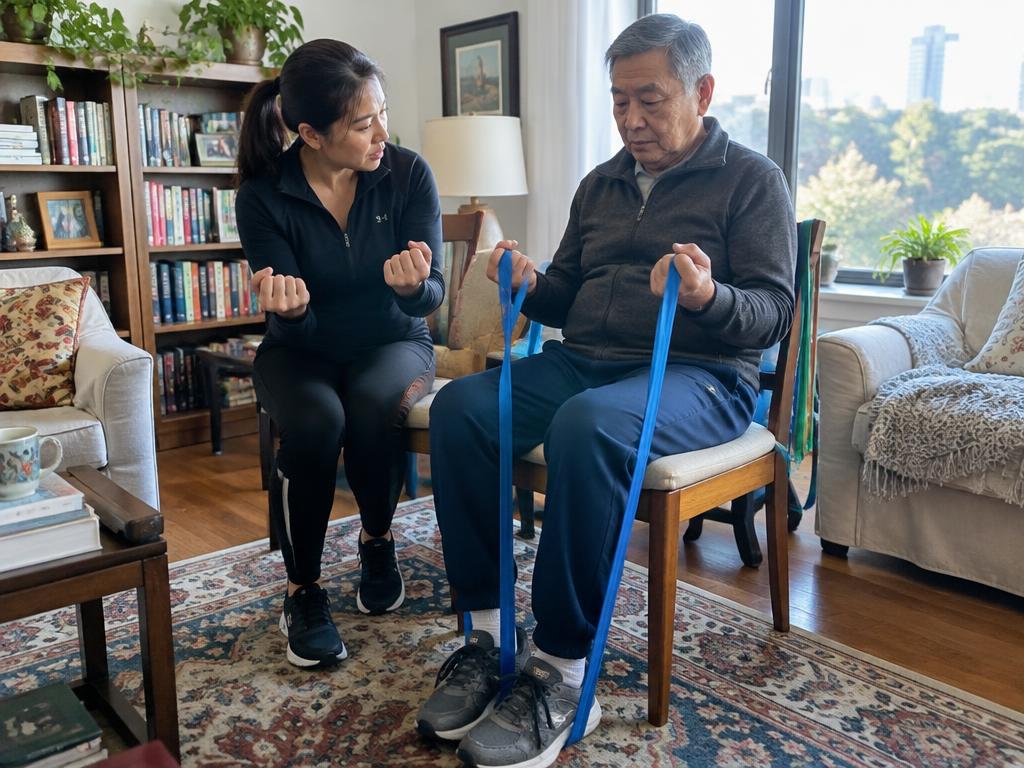
The phrase "personal training" tends to conjure the wrong picture: a shouting coach, a crowded gym, heavy barbells. In home training for people in their seventies and eighties looks nothing like that. It is calm, practical and built around the real things you want to do: get up from the couch without a push, carry groceries in from the car, take the stairs at your daughter's house, stand steady at the sink.
If you or a parent is considering it, here is what to expect.
Why strength matters so much later in life
Muscle naturally declines as we age, and the decline speeds up when we sit more. Balance gets shakier too. The encouraging part is that strength and balance respond to training at any age. Studies of people well into their eighties and nineties show real gains from regular, simple resistance exercise.
In plain terms, that means many of the movements that start to feel hard, like standing from a low chair or stepping up a curb, can become easier with a few months of steady work. A trainer is not a medical provider, and anyone with a heart condition, recent surgery or a fall should talk to their doctor first. But for most older adults, the right kind of exercise is one of the most useful things they can do.
What a first visit looks like
A good first visit is mostly listening and a few easy tests. Here is a typical flow:
- Ten minutes of conversation. What does a normal day look like? What feels hard? Any aches, surgeries or worries?
- A few simple checks. How many times you can stand up from a chair in thirty seconds, a short walk down the hall, standing balance with and without support.
- A gentle first workout. Supported squats from a chair, step ups on the bottom stair, wall push ups, rows with a band, heel raises at the counter.
- A take home plan. Two or three exercises written on a card or a sheet you can stick on the fridge.
You should finish feeling like you worked a little, not like you were wrung out. A good trainer will check in constantly and never push past what feels right.
What equipment you need
Less than you think. On Home Happenings, every personal trainer's profile says which of three approaches they take:
- Brings a full kit. Resistance bands, light dumbbells, a mat and a low step come with the trainer. You do not need to buy anything.
- Brings a few basics. Usually a band or two and a mat. Most of the work uses a sturdy chair, a wall and your own body weight.
- Uses what you have at home. No equipment at all. The bottom stair, the kitchen counter, a dining chair and two soup cans do the job, and you can repeat everything on your own.
None of these is better than the others. A full kit adds variety. The home approach makes it easiest to practice between visits. Pick what suits the person and the house. You can see each trainer's approach on their card when you browse personal trainers.
Whatever the approach, it helps to have a sturdy chair without wheels, supportive shoes, water, and a clear path about the size of a rug.
How often, and for how long
Once a week with a trainer, plus a couple of short sessions on your own, is a common rhythm. Visits on Home Happenings are one, one and a half or two hours. For training, one hour is usually right. Many families book "4 weeks, same time" to start, which builds a habit and gives you enough time to notice a difference.
What kind of difference? Families often mention small, specific wins: Mom can get up from the couch without using the armrest. Dad walked the whole block. The stairs at Thanksgiving went fine. Those are the moments that matter.
How to choose a trainer
Read profiles with a few questions in mind:
- Do they work with older adults? Look for certifications like a senior fitness specialist, and for real experience with people in their seventies and eighties.
- How do they describe a first visit? You want someone who starts with listening and simple tests, not a hard workout.
- What do they bring? Match the equipment approach to the home.
- Does their tone fit? Some people want a cheerful coach who counts out loud. Some want a calm, quiet one. The About me section usually makes this clear.
You can message any trainer before booking. Contact details stay private in messages, so ask whatever you want: how they handle bad knees, whether they have worked with someone after a hip replacement, what they would do on a day when energy is low.
Every pro on Home Happenings completes five checks before their profile goes live, including a criminal background check and a national sex offender registry check. See How It Works for details.
Making it stick
- Same time every week. Routines survive. Good intentions do not.
- Write down the home exercises. Tape the card where you will see it, maybe next to the coffee maker.
- Notice the wins. Keep a little log: thirty second chair stands, how far you walked, how the stairs felt.
- Bring in the family. A grandchild doing wall push ups next to Grandpa is good for everyone.
Trainers on Home Happenings visit homes across Essex County, including West Orange, South Orange, Verona and Glen Ridge. Some travel farther, with a flat $25 travel fee for homes 20 miles or more from where they are based.
Getting stronger after seventy is not about looking like an athlete. It is about keeping the life you want, one sit to stand at a time.
Related activities
Find a local pro
Checked and vetted professionals who teach at home across Essex County.
Browse professionals