Recording a parent's life story before it's too late
How to capture a parent's stories in their own voice, what to ask, what to do with the recordings, and when it helps to bring in a guide.
By the Home Happenings team · September 27, 2026
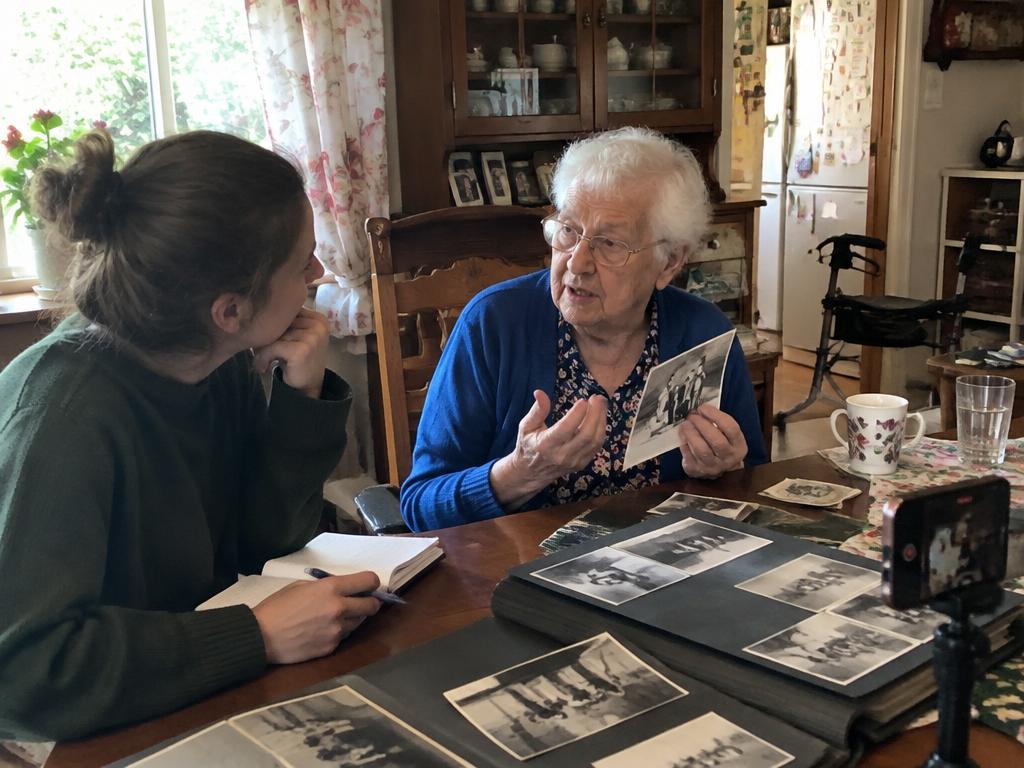
Almost everyone who has lost a parent says some version of the same thing. "I wish I had asked more." About the town they grew up in. About how they met. About the year nobody talks about. About the recipe, the song, the joke that only made sense if you were there.
The good news is that it is easier than ever to save those stories, in your parent's own voice, while there is still time. The hard part is not the technology. It is actually sitting down to do it.
Why the voice matters
A written family history is wonderful. A recording is something else. Years from now, your kids will be able to hear exactly how their grandmother laughed, how she said the name of her street, the pause before the punch line. Families who have recordings tell us they play them at birthdays, at holidays, and sometimes on an ordinary Tuesday when they simply want to hear the voice.
If you do only one thing after reading this, record one conversation this month. Your phone is good enough.
How to set it up
- Pick a quiet room. A kitchen or dining table works well. Turn off the TV and anything that hums.
- Put the phone close. Use the voice memo app and set the phone on a folded towel on the table, about a foot from your parent. Do a ten second test and listen back.
- Bring props. Old photo albums, letters, a wedding invitation, a medal, a recipe card in Grandma's handwriting. Objects unlock memories that questions alone do not.
- Keep it short. An hour is plenty. Two shorter visits are better than one long one.
- Make it a regular thing. The best material often comes in the third or fourth conversation, once everyone relaxes.
What to ask
Open questions work best. Avoid anything that can be answered with yes or no. Start in childhood, where memories are often vivid and safe, and let the conversation wander.
Some questions that tend to open things up:
- What did the house you grew up in look like? Walk me through the front door.
- Who was the funniest person in your family?
- What did you do on a summer Saturday when you were ten?
- What was your first job, and what did you buy with the first paycheck?
- How did you meet Dad? What did you think of him at first?
- What was the hardest year of your life, and how did you get through it?
- What is something you were proud of that nobody really noticed?
- What do you want your great grandchildren to know about you?
Then follow the energy. If your father's face changes when he mentions his Army buddy, ask about the buddy. The best stories are usually one question past the one you planned.
What makes it hard
It is one thing to know all this and another to do it. Many adult children find it surprisingly difficult to interview their own parent. Old dynamics creep in. Your mother tells the polished version she always tells. Your father changes the subject. You do not want to ask about the painful parts. And frankly, between work and kids, the Sunday you planned for it keeps getting pushed.
That is where a guide can help. A trained storyteller is not part of the family history, so parents often tell them things they have never told their kids. A good guide asks better questions, keeps things moving and handles the recording, so you do not have to.
What a guided storytelling visit looks like
On Home Happenings, a storytelling visit is a guided, recorded conversation at your parent's home. The pro sits with them at the table, usually with old photos and keepsakes close by, and asks about their life. Each visit leaves an audio recording and a short written summary with names, places and the best lines in your parent's own words. Those are shared only with the household that booked.
Some local storytellers go further. A few bring a small video camera and lights and make a short film of the family story, with old photos woven in. Others record audio especially for the grandkids, or turn a series of conversations into a printed book you can hand down. Each pro's profile describes what they offer and what to have ready. See local storytellers on the storytelling page.
It is worth saying clearly: this is a conversation, not counseling. It is about remembering and enjoying a life, not working through anything clinical.
What to do with the recordings
- Back them up in two places. A shared family folder in the cloud plus a copy on a home computer.
- Name the files clearly. "Mom 2026-10 Childhood in Newark" will mean something in thirty years. "Recording 47" will not.
- Share the summaries. A one page summary is often what siblings actually read.
- Play them at gatherings. Ten minutes of Grandpa telling the story of the blizzard of 1947 at Thanksgiving is something nobody forgets.
- Consider a keepsake. A printed book or a short film makes a lovely gift for a milestone birthday.
Start this month
There is no perfect time, only sooner. Call your parent this week and say, "I want to hear about where you grew up. Can I come over Sunday with the old albums?" Or book a storyteller who serves their town, such as Montclair, Maplewood or Short Hills, and let someone else ask the questions.
The stories are there. They just need someone to sit down, press record and listen.
Related activities
Find a local pro
Checked and vetted professionals who teach at home across Essex County.
Browse professionals