What to do with an aging parent who doesn't want to leave the house
When Mom or Dad stops wanting to go out, the answer is rarely to push harder. Here is what tends to work instead, from families who have been there.
By the Home Happenings team · October 13, 2026
It usually starts small. Your mother skips the Tuesday lunch she used to love. Your father says the senior center is "full of old people" and stops going. The car sits in the driveway more weeks than not. Then one day you realize your parent has not really left the house in a month, and every suggestion you make lands like an argument.
If that sounds familiar, you are not doing anything wrong, and neither is your parent. Staying home is often a reasonable choice that grew out of real things: driving at night got harder, a friend moved away, a fall made stairs and parking lots feel risky, or hearing loss turned a noisy restaurant into an hour of nodding along. The goal is not to drag anyone out the door. The goal is to make sure the days at home are full, interesting and connected to other people.
First, figure out what is actually going on
Before you plan anything, have a calm conversation. Not at a holiday dinner, and not right after a worrying phone call. Pick a quiet afternoon and ask open questions. What do you miss doing? What makes going out feel like a hassle? Is it the driving, the walking, the people, the noise?
You will often hear something specific. "I can't hear anyone at the diner." "I don't want to use the cane in front of people." "Everyone I played bridge with is gone." Each of those has a different answer, and none of them is "you just need to get out more."
It also helps to separate the parent who is content at home from the parent who is bored or low. Plenty of people in their eighties are genuinely happy with a quiet house, a good book and a phone call with the grandkids. If your parent seems flat, has stopped enjoying things they used to love, or is sleeping much more than usual, mention it to their doctor. That is a medical question, and it deserves a real answer.
Bring the good parts of going out into the house
When someone stops leaving home, what they lose is usually not the trip itself. It is the reasons for the trip: learning something, being good at something, laughing with other people, having a fixed point in the week to look forward to. You can bring a surprising amount of that inside.
A few ideas families tell us work well:
- A weekly lesson at the kitchen table. Piano, watercolor, cooking, or learning to use the iPad for video calls. A real teacher who shows up every Thursday gives the week a shape.
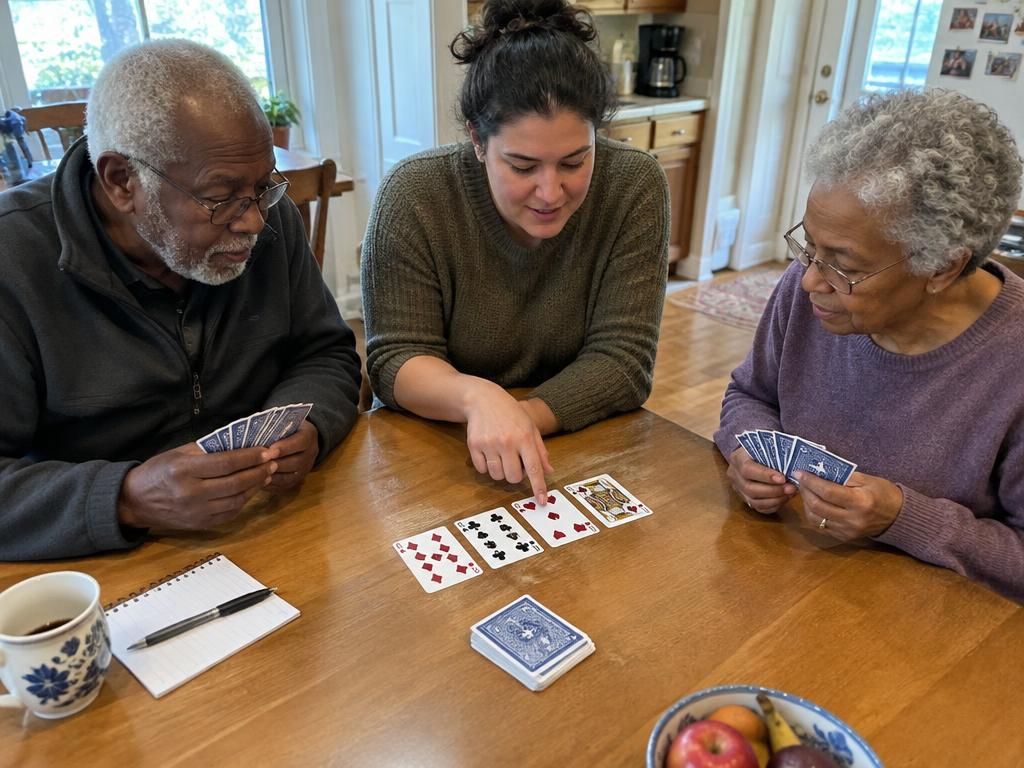
- A regular game. If your mother loved mahjong or your father played bridge for forty years, the game is often what they miss most. Four players at a card table in the dining room feels a lot like the old club.
- Movement that fits the house. A personal trainer who works with a sturdy chair, the bottom stair and a couple of bands can rebuild the strength that makes going out feel possible again.
- Something to tend. A raised bed by the back door, herbs on the porch, a window box. Gardening gets people outside without making them go anywhere.
- Their story. Many older adults light up when someone sincerely wants to hear about the house they grew up in or their first job. A guided storytelling visit leaves the family with a recording to keep.
You can see the full list of what local pros teach on our activities for seniors page.
Make it about them, not about you worrying
This is the part that trips up a lot of well meaning kids, and we say that as kids of aging parents ourselves. If the pitch is "I worry about you sitting home alone," your parent hears that they are a problem to be managed. If the pitch is "You always said you wanted to learn to paint," they hear that you remember who they are.
Let your parent choose. Show them two or three pros and let them pick the one whose face and story they like. Let them choose the day and time. If they say no to piano, ask about gardening. People are much more willing to try something they picked.
It also helps to start with a single visit, not a commitment. "Just try it once" is a much easier yes than "I signed you up for twelve weeks." If it goes well, a weekly time at the same hour becomes something they defend on the calendar.
Think about the people, not just the activity
The best visits are not really about the activity. They are about a patient, interesting person who shows up reliably and treats your parent like a capable adult. That is why it is worth reading profiles closely. Look for pros who describe how they teach, what a first visit looks like and what they will ask your parent to have ready. A good pro will tell you plainly that they go at the learner's pace and that nobody needs to be good at anything to start.
Every pro on Home Happenings goes through five checks before their profile goes live, including a criminal background check and a national sex offender registry check, and a real conversation with our team. You can read exactly what we check on How It Works.
When going out becomes possible again
Here is something families mention a lot. Once a parent has a few good weeks at home, a little stronger from training, a little more confident with the phone, a little more themselves after a regular game, going out often stops feeling like such a big deal. The trainer who practiced stairs every week gets credit when Dad walks into his granddaughter's recital. The bridge teacher mentions a Wednesday game at the library, and Mom decides to try it.
That is not guaranteed, and it does not need to be. A full, connected life at home is a perfectly good outcome on its own.
A simple way to start this week
- Have one calm conversation about what your parent misses.
- Pick two activities that connect to things they already love.
- Show them a few local pros and let them choose.
- Book one visit, at a time of day they like.
- Call afterward and just ask how it went.
If your parent lives in Essex County, you can browse pros by town, including Montclair, West Orange and Livingston. Message any pro before you book. Contact details stay private, and you can ask anything you want to know first.
Staying home is not the end of an interesting life. With the right people coming through the door, it can be the start of a pretty good new chapter.
Related activities
- GardeningPlant, prune and learn practical gardening skills at home.
- Board and card gamesMahjong, bridge, canasta, or someone to play a real game of chess with.
- Tech helpLearn your phone, tablet and video calls, one step at a time.
- Personal storytellingA guided conversation about your life, recorded for your family. Old photos welcome.
Find a local pro
Checked and vetted professionals who teach at home across Essex County.
Browse professionals