Chair yoga at home for seniors: what a first session actually looks like
What to have ready, what the teacher asks, and the breathing, warm ups and seated poses you can expect in a first chair yoga session at home.
By the Home Happenings team · October 5, 2026
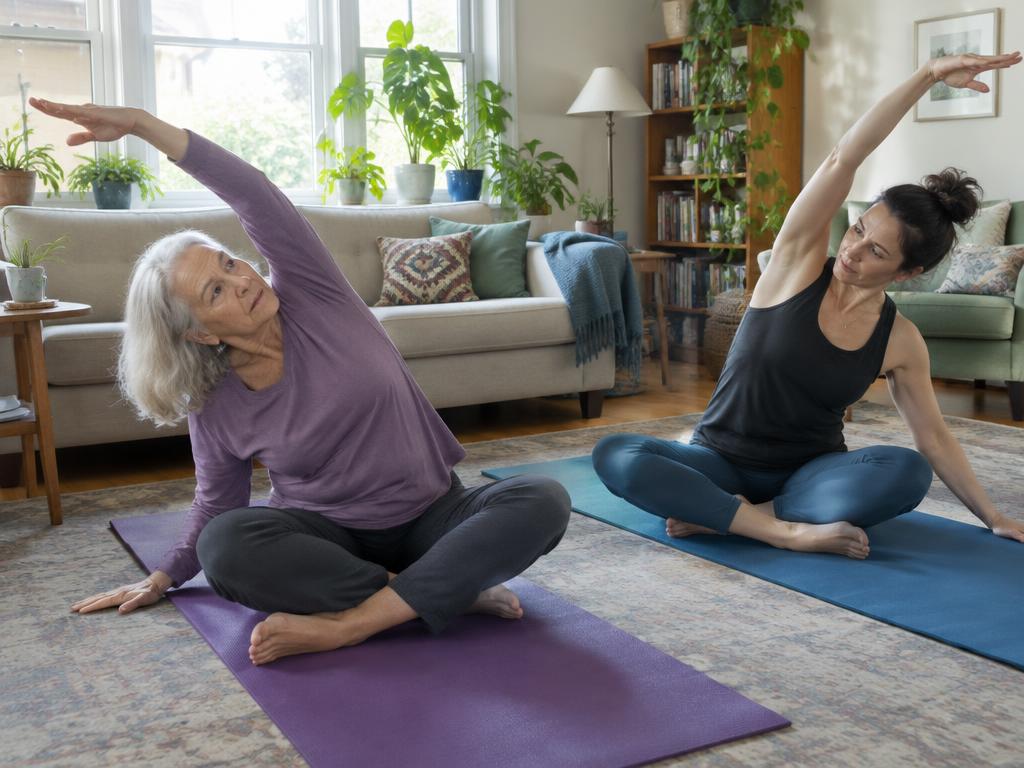
If you've never done chair yoga, the name can sound like a joke or a compromise. It's neither. It's yoga adapted so the chair does the job the floor usually does. It supports you and steadies you, and it lets you work on breathing, flexibility and posture without getting down on a mat and back up again.
If you're thinking about trying it at home, or booking it for a parent, here's what a first session actually looks like, start to finish.
Before the teacher arrives
You don't need much. The teacher will usually tell you what to have ready, and you can message them ahead of time with questions.
What helps:
- A sturdy chair without arms, or with arms that don't get in the way. A kitchen or dining chair is ideal. Skip anything with wheels, a recliner, or a soft couch.
- A clear patch of floor around the chair, about an arm's length on each side
- Comfortable clothes you can move in. No special yoga outfit needed.
- Socks with grip, bare feet, or flat shoes. Slippery socks on a wood floor are the one thing to avoid.
- A glass of water nearby
If you use a cane or walker, keep it close. A good teacher will work with it, not around it.
The first few minutes: talking, not moving
Most first sessions start with a conversation. The teacher will ask what you're hoping to get out of it, how you're feeling in your body, and whether anything hurts or has given you trouble lately. Think shoulders, knees, hips, back, a recent surgery, feeling lightheaded when you stand.
This isn't a medical intake, and a yoga teacher isn't a doctor. If you have a condition that makes you unsure about exercise, ask your own doctor first. But be honest with the teacher about what's going on. They'll leave things out or change them based on what you tell them.
It's also a good time to say what you don't want. Some people don't like closing their eyes. Some don't want to be touched to adjust a pose. You can say so, and a good teacher will simply work around it.
Breathing comes first
Almost every session starts with breath. You'll sit tall, feet flat on the floor, hands resting on your thighs, and the teacher will guide you through slow breathing. In through the nose, out a little longer than in.
It sounds too simple to count as exercise. But many people find this is the part they end up using most. It's something you can do in a waiting room, before a phone call that makes you nervous, or lying in bed when you can't sleep.
Gentle warm-ups
Next come small movements to wake things up:
- Rolling the shoulders forward and back
- Turning the head slowly side to side, never forcing it
- Circling the wrists and ankles
- Lifting one heel, then the other, like marching in place while seated
Nothing here should hurt. If something pinches, say so and the teacher will change it.
The main part: seated poses
This is where chair yoga looks most like yoga. A typical first session might include:
Seated cat and cow. Hands on knees, you gently arch your back and lift your chest, then round your spine and drop your chin. It's one of the nicest ways to move a stiff back.
Seated side stretch. One arm reaches up and over while the other rests on the chair. Then you switch.
Seated twist. Sitting tall, you turn your upper body to one side, holding the back of the chair or your knee, then the other side. It's slow, and the teacher will tell you how far is far enough.
Seated forward fold. You hinge forward from the hips, letting your hands slide down your legs as far as is comfortable. For some people that's mid shin. For some it's the knees. Both are fine.
Leg extensions. You straighten one leg out and flex the foot, which works the front of the thigh and stretches the back of it.
Standing, if it suits you
Some first sessions include a few standing poses that use the chair for support. You might stand behind it with both hands on the backrest and do gentle heel raises, or a modified tree pose with one foot resting against the other ankle.
This part is optional. If standing isn't right for you today, you stay seated and the teacher adjusts. Plenty of people do chair yoga for months entirely seated.
Rest at the end
Sessions usually close with a few minutes of stillness. You sit comfortably, eyes open or closed, and breathe. The teacher may talk you through relaxing each part of the body, from your forehead down to your feet. Then a slow return to moving, and that's it.
How long, and how you'll feel after
On Home Happenings, a visit is 1, 1.5 or 2 hours. For yoga, an hour is usually plenty, especially at first. That leaves room for the conversation at the start and a few questions at the end.
Afterward, most people say they feel looser and a bit calmer. You might notice a few muscles the next day that you'd forgotten about. That's normal. Sharp pain isn't, and it's worth mentioning to the teacher next time.
What changes after a few weeks
The first session is about learning the shapes. Over a few weeks, you'll need fewer instructions. You'll know when to breathe in and when to breathe out. Many people start doing the breathing or a couple of stretches on their own between visits, which is really the point.
Regular gentle movement is widely recommended for staying flexible and steady on your feet. Chair yoga won't fix everything, but it's a realistic habit for people who'd never sign up for a class at a studio.
A teacher who comes every week also gets to know you. They'll remember that your left shoulder is the cranky one and build the session around it.
Booking for a parent
If you're setting this up for Mom or Dad, a few tips:
- Ask them first. Yoga booked as a surprise can feel like a hint.
- With your parent's okay, tell the teacher anything useful in a message before the first visit.
- Try "4 weeks, same time" before anything open ended. It's long enough to get past the slightly awkward first session.
- Read the pro's note after each visit. It'll tell you what they worked on and how it went.
If your parent is more interested in building strength than stretching, personal training at home is the other direction to look. It focuses on strength, balance and mobility.
Trying it
Teachers come to homes across Essex County, from Montclair to Millburn. The yoga page lists teachers who offer gentle and chair yoga, with their usual days and the towns they cover. If you'd like the details on booking and cancellations first, how it works lays them out. Or just send a teacher a message and ask your questions. That's what it's there for.
Related activities
Find a local pro
Checked and vetted professionals who teach at home across Essex County.
Browse professionals