Activity ideas for independent living residents who skip group programs
Why some residents skip every group program, small fixes that bring them in, and how one-on-one lessons at home can work alongside your calendar.
By the Home Happenings team · October 12, 2026
Every independent living community has them. The resident who reads the activity calendar every month and never signs up for anything. The retired engineer who finds group exercise silly. The widow who was always a one-on-one person and does not want to sit in a circle with strangers.
These residents are not necessarily unhappy. But when someone skips everything, staff worry, and families often call asking what more can be done. This post covers activity ideas for independent living residents who skip group programs, and how one-on-one lessons at home can work alongside your calendar instead of competing with it.
First, find out why they skip
"Not a joiner" is a description, not a reason. A short, friendly conversation usually turns up something more specific. Common reasons include:
- They don't like being a beginner in front of people. This is especially true for anything physical or creative.
- The pace is wrong. Group classes move too slow for some and too fast for others.
- Hearing or vision makes groups tiring. Following a conversation across a table of eight is hard work with hearing aids.
- The topics don't interest them. A man who rebuilt engines is not going to show up for watercolor flowers.
- They are new and don't know anyone yet. Walking into an established group feels like crashing a party.
- Timing. They nap, or a standing phone call with a daughter lands right during the 2 p.m. program.
Each of these points to a different fix. Some can be solved inside your existing programs. Others are better served one-on-one.
Small changes to group programs
Before adding anything new, a few adjustments can bring in residents who are on the fence:
- Personal invitations work better than flyers. A staff member saying "I saved you a seat" moves people more than the calendar does.
- Offer a smaller version. A table of four for cards, or a two-person walking group, feels very different from a room of twenty.
- Give people a role. The retired teacher may not join a book club but might lead one. The former accountant might keep score at bridge.
- Move the time. If your skippers share a schedule pattern, an evening or weekend slot may be all it takes.
- Let them watch first. Some people need to see a session before they will try one.
Activity ideas that suit the one-on-one person
Some residents will never love a group, and that is fine. These activities tend to work well one-on-one, in the resident's own apartment:
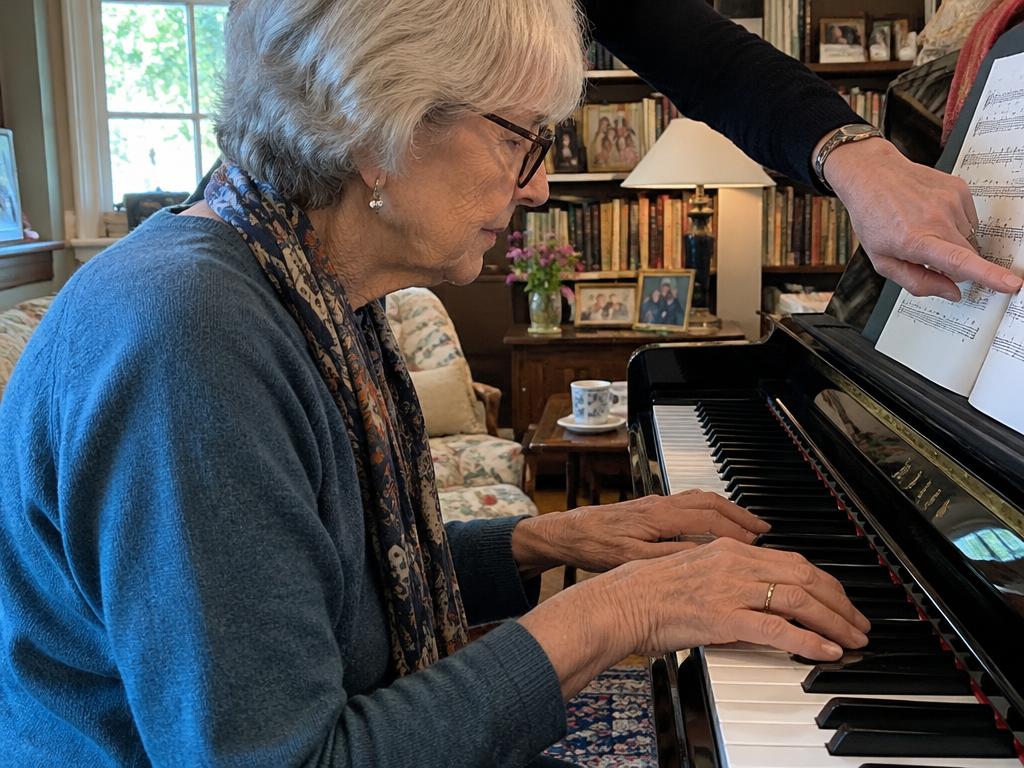
- Learning or returning to an instrument. Piano and guitar are naturally private. Many adults who quit as kids would like to try again, as long as nobody is listening. See music lessons.
- Tech help. Plenty of residents skip programs partly because they can't get the community app, the video call or the photo sharing to work. A patient teacher fixing that, one step at a time, can open other doors.
- Personal training. A resident who would never do chair exercise in the lounge may happily work on strength and balance with a trainer in their apartment.
- Drawing or watercolor. Some people want to make art but cannot stand having others see their early attempts.
- Telling their life story. A guided conversation, recorded for the family, suits private people who have plenty to say but not to a room. More on this in personal storytelling.
- Cooking in their own kitchen. Residents with a full kitchen sometimes want to cook again, a recipe at a time, after years of cooking only for one.
- A weekly chess game. For a strong player, a real opponent once a week can matter more than any group program.
How one-on-one lessons fit with your calendar
The worry some activity directors raise is that private lessons pull residents further away from community life. In practice it often works the other way.
A resident who learns enough guitar to enjoy it may show up at the next sing-along. Someone whose trainer has been working on balance may feel steady enough to try the walking group. A resident who finally understands the tablet might start reading the community newsletter online and seeing what is on.
Think of one-on-one lessons as a side door into your programs. They build confidence and give residents something to talk about, which is often what it takes to sit down at a group table later.
Who arranges it
At most independent living communities, one-on-one lessons are arranged and paid for by the resident or their family, not the community. Your role is usually to suggest the idea and point families in the right direction.
When a family asks you what else might help, it is useful to have a short answer ready. On Home Happenings, families in Essex County can browse local pros who come to a parent's home to teach an activity, read their profiles and reviews, and message them before booking. Pros set their own hourly rate between $50 and $150, and families can book a single visit or a weekly time. After each visit, the pro leaves a short note the family can read, which adult children who live far away tend to appreciate.
A few practical things to sort out with the family:
- Building access. Make sure the front desk knows a visitor is coming and when.
- Space. A keyboard, a yoga mat or a small easel needs a clear spot in the apartment.
- Timing. Avoid stacking a lesson on top of the resident's favorite group program, if they have one.
What to say to the resident
Residents who skip groups have often heard every pitch. Keep it low key and specific:
- "Your daughter mentioned you used to play piano. There are teachers who come to the apartment, just you and them."
- "You said the tablet drives you crazy. Would an hour with someone patient help?"
- "You don't have to join anything. This would be one person, at your place, at a time you pick."
Then let it sit. People who skip groups usually dislike being pushed, and they come around on their own timeline.
Next steps
If your community would like to bring a pro in for a small group class, start on our senior communities page. If a family is asking about one-on-one lessons for a resident, you can send them to browse in-home activities, where they can see who teaches near them.
Related activities
- Music lessonsLearn an instrument, sing favorite songs or explore music at your pace.
- Personal storytellingA guided conversation about your life, recorded for your family. Old photos welcome.
- Tech helpLearn your phone, tablet and video calls, one step at a time.
- Personal trainingBuild strength, balance and confidence with movements chosen for you.
Find a local pro
Checked and vetted professionals who teach at home across Essex County.
Browse professionals