How to talk to a parent about trying something new
Scripts to borrow, phrases to avoid, and how to handle the first no when you want Mom or Dad to try a new activity.
By the Home Happenings team · October 9, 2026
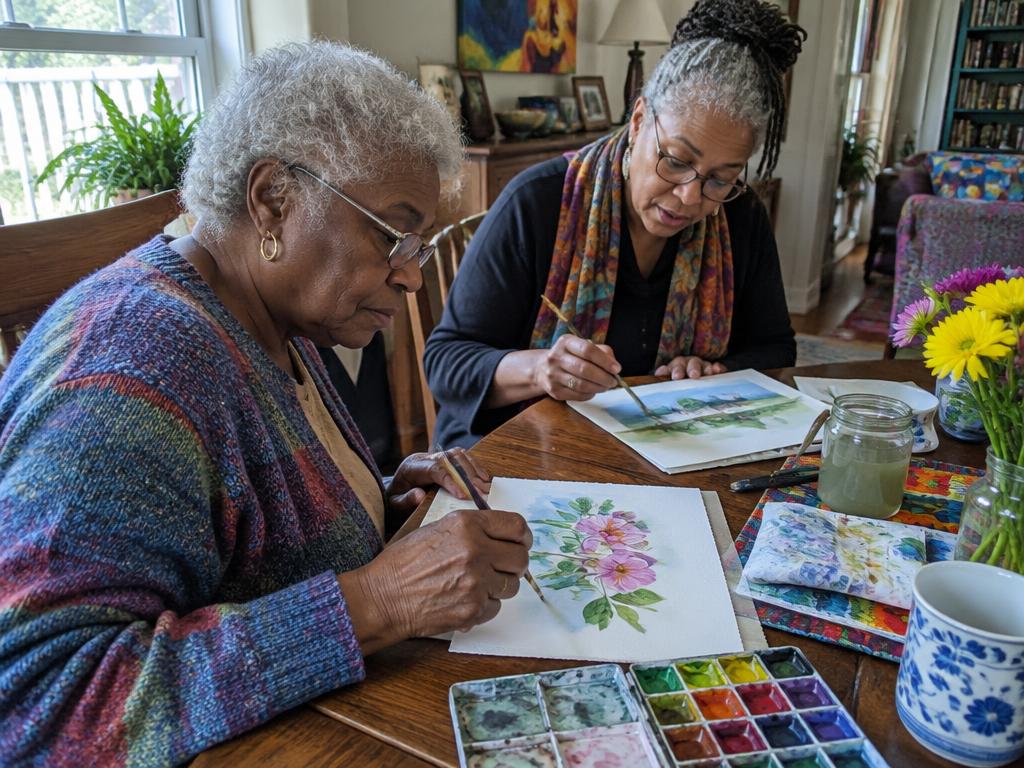
You've noticed your mom doesn't leave the house much since she stopped driving. Or your dad has the TV on most of the day now that his friends have moved away. You have an idea that might help: lessons, a weekly game, something. And you already know how the conversation will go. "I'm fine." "I don't need that." "Don't waste your money."
This conversation is hard because it brushes up against things nobody likes talking about: getting older, needing help, being seen as less capable. The good news is that how you bring it up makes a real difference. Here's what tends to work, a few scripts you can borrow, and the phrases that almost always backfire.
First, figure out what you're hoping for
Before you say anything, get clear with yourself. Are you hoping your parent will be less lonely? Stronger? More engaged with the world? Is part of it that you'd feel less guilty? That's normal, but it's worth knowing, because parents can usually tell when a suggestion is really about the person suggesting it.
Then think about what your parent actually likes. Not what would be good for them. What they like. That's where the conversation should start.
Start with them, not with the problem
The most common mistake is leading with the worry. "I'm worried you're alone too much" might be true, but it puts your parent on the defensive right away. Now they have to argue that they're fine.
Start with something they enjoy, or used to.
Instead of: "I'm worried you're not getting enough exercise." Try: "You used to walk every morning. Do you miss that?"
Instead of: "You need to get out more." Try: "Remember when you and Aunt Ruth played cards every Thursday? Would you ever want to do that again?"
The second version opens a conversation. The first one opens an argument.
Scripts you can borrow
These are starting points. Change the words until they sound like you.
For the parent who used to do something: "You always said you wanted to get back to the piano. I found someone who comes to the house to teach. Would you want to try one lesson and see?"
For the parent who loves to tell stories: "The kids keep asking what it was like when you were growing up, and I can never remember the details. There are people who'll sit down with you and record those stories. Would you do that for them?"
This one works because it's a favor to the family, not something being done to your parent. Here's more on personal storytelling if you want to know what it involves.
For the practical parent: "Your phone keeps giving you trouble. What if someone came over once and just set it up the way you like it?"
For the social parent who lost their group: "What if we found someone to teach Mahjong and invited a few of your neighbors? You'd just have to host." (Mahjong and Canasta need four players at the table, and a pro who brings the game and teaches. See board and card games for how it works.)
For the parent who resists anything that sounds like help: "I was given this and I can't use it. Would you take it off my hands?" Use this one with judgment. Some parents will see right through it and be annoyed.
What not to say
Some phrases reliably shut things down:
- "At your age..." Nobody wants to hear what they can't do at their age.
- "You need..." Adults don't like being told what they need. Offer, don't prescribe.
- "Everyone your age does this." They don't want to be everyone their age.
- "It'll be good for you." Even when it's true, it sounds like medicine.
- "I already booked it." A surprise booking takes away their choice. Unless you know for sure they'll love it, ask first.
- "The doctor said..." Bringing in outside authority can feel like you've been talking about them behind their back.
Also, pick your setting. A holiday dinner with siblings and grandkids is the worst possible place for this. One on one, low stakes, no audience. A drive or a walk can work well, because sitting side by side feels less like a confrontation than sitting across a table.
Expect a no the first time
Most people say no to new things the first time they hear about them. That's often a reflex, not a final answer.
Let it sit. Don't argue. Say something like "Okay, it was just an idea," and drop it. A week or two later you may hear "What was that thing you mentioned?" That happens more often than you'd think.
If it's still no after a couple of tries, respect it. Pushing harder turns the idea into a battle, and nobody enjoys a hobby they were pressured into.
Make the first step small
"Weekly yoga lessons" sounds like a commitment. "One visit to see if you like it" doesn't. Shrink the ask.
- Offer one session, not a series
- Offer to be there for the first one, or to call right after
- Let them pick the day and time
- Make it clear they can stop whenever they want
On Home Happenings, you can book just one visit for most activities before trying anything longer. Cancellation is free up to 3 days before, which takes some pressure off if your parent has second thoughts.
Let them meet the person first
A lot of resistance is really about letting a stranger into the house. That's reasonable. It helps to know that every pro on Home Happenings is background checked and vetted by our team, and that you or your parent can message them before booking. Looking at a pro's profile together, with their photo, credentials and reviews, can turn "a stranger" into "that nice woman who teaches watercolor."
If you live far away
Distance makes this harder, but not impossible. Have the conversation by phone or video, not over text. Follow up with a link they can look at on their own time. If they agree, you can handle the booking and payment from wherever you are, and after each visit the pro writes a short note you can read. You'll hear how it went even if your parent's whole report is "it was nice."
When they say yes
Don't overdo it. Skip the "I knew you'd love it!" Let them own the decision. Ask how it went, but don't quiz them.
And if after a few visits it's not for them, that's fine too. Try something else. Some people need a couple of tries before they find the thing that sticks.
Where to start looking
If you'd like a few options in mind before the conversation, the browse page shows every activity and the pros near your parent's town, from music and art to cards and gardening. If you're curious why we started Home Happenings, why it matters is a short read. You don't need it all figured out. You just need one good idea and the right moment to bring it up.
Related activities
- Board and card gamesMahjong, bridge, canasta, or someone to play a real game of chess with.
- Personal storytellingA guided conversation about your life, recorded for your family. Old photos welcome.
- Music lessonsLearn an instrument, sing favorite songs or explore music at your pace.
- YogaPractice gentle yoga and breathing with clear, personal instruction.
Find a local pro
Checked and vetted professionals who teach at home across Essex County.
Browse professionals