Meaningful activity at home: a referral guide for social workers and geriatric care managers in New Jersey
When to suggest in-home activity lessons, how to raise it with families, what to look for in a provider, and how it differs from home care and day programs.
By the Home Happenings team · September 23, 2026
If you work with older adults in New Jersey, you already know the pattern. The medical side gets handled. The aide schedule gets worked out. The pill organizer is filled. And then, a few weeks later, a daughter calls to say Mom is "fine, but she doesn't do anything anymore."
That gap is real, and it is often the hardest one to close. This guide is for social workers, geriatric care managers, discharge planners and anyone else who advises families about what comes next. It covers when an in-home activity makes sense, how to bring it up, what to look for in the person who will show up at the door, and how it fits next to the services you already recommend.
When to suggest it
Most of the time the signal is not a crisis. It is a slow narrowing. A few situations where an activity at home is worth raising:
- A client has stopped doing something they loved. The piano is covered with mail. The garden went to weeds after a fall. The bridge group dissolved when two members moved away.
- Getting out is the obstacle, not interest. No longer driving, a recent hip replacement, a spouse who can't be left for long, or simply hating the logistics of getting somewhere.
- The week has no shape. Aide visits happen, meals happen, but nothing on the calendar is something they look forward to.
- A family is asking you what to do. Adult children, especially those living out of state, often want something concrete they can set up and pay for.
- A move is not wanted or not needed. The person is staying at home, and the question is how to make home a better place to spend the day.
It is less of a fit when someone needs hands-on help with bathing, toileting or medication. That is a job for home care, and an activity lesson is not a substitute.
How to talk to families about it
Families tend to hear "activities" and picture crafts at a folding table. The framing matters. A few phrases that land better:
- "She used to paint. What if someone came to the house and painted with her once a week?"
- "This is a lesson with a teacher, not a sitter. It's an hour of doing something, not an hour of being watched."
- "Think of it like hiring a piano teacher for a kid, except it's for your dad, and the teacher comes to him."
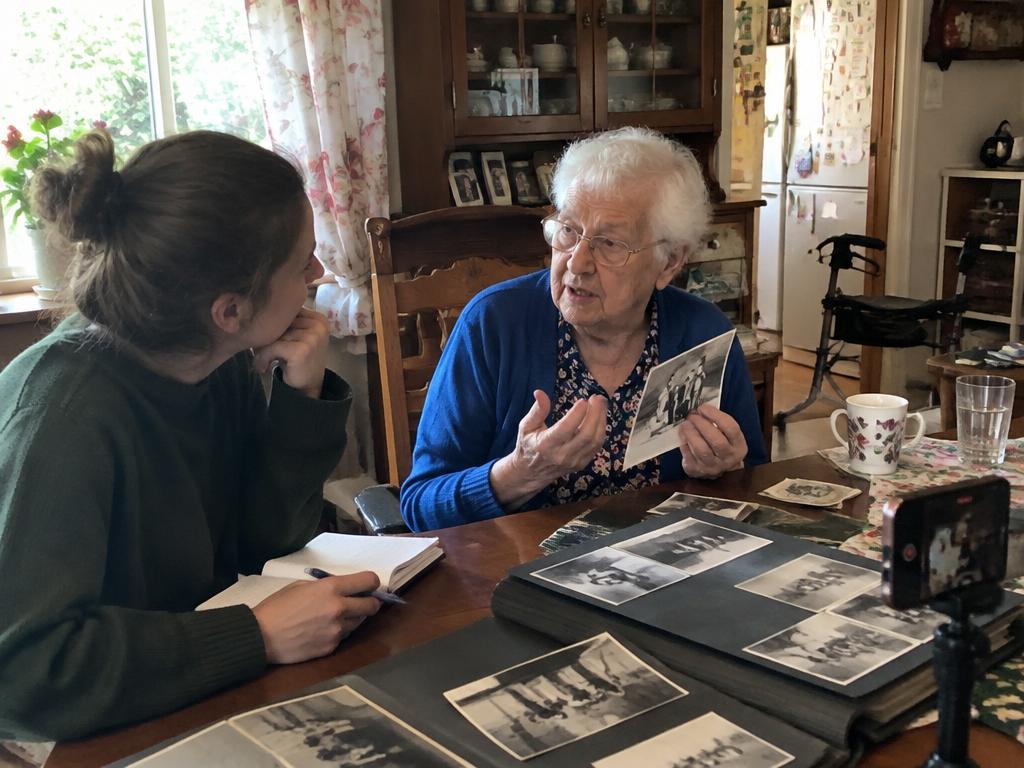
It also helps to start with the person's own history. Ask the client, not just the family: what did you used to love? What did you always want to learn? A retired engineer may light up at the idea of finally getting the tablet to do what he wants. A former teacher may want to record her life story for the grandchildren. Our Personal storytelling sessions grew out of exactly that request.
Expect one objection more than any other: "He won't want a stranger in the house." That is fair. Suggest the family message the pro first, ask questions, and book a single visit before committing to anything weekly.
What to look for in a provider
If you point families to us or to someone else, these are the questions worth asking:
- Background check. Has the person been checked, and by whom?
- Real experience with the activity. Not just "good with seniors," but an actual art teacher, a trained yoga instructor, someone who plays bridge seriously.
- Experience adapting for older adults. Can they teach chair yoga? Can they set up a garden bed so no one has to kneel? Can they explain a phone settings menu slowly without making it feel like a lecture?
- Credentials that match the claim. Music therapy is a specific profession with a board certification (MT-BC). A piano teacher is wonderful, but is not a music therapist. On Home Happenings, the music therapy option only appears for therapists whose MT-BC credential our team has verified.
- Clear notes after each visit. Families, and you, should be able to see what happened.
- Clear pricing and cancellation terms. Surprises damage trust fast.
On Home Happenings, every pro is background checked and vetted by our team. Profiles show credentials (marked verified when we have confirmed them, self-reported otherwise), reviews, usual days and the towns each pro serves. After every visit the pro writes a short note the family can read. You can see how it works on our how it works page.
How it differs from home care and day programs
This is the part families mix up most, so it is worth being precise.
Home care agencies provide aides who help with daily living: bathing, dressing, meals, light housekeeping, safety. Their job is to support the person. An activity pro's job is to teach something. They are complementary, and many of our families have both.
Adult day programs offer a full day of structure in a group setting, often with meals, transportation and staff oversight. They are a great fit for some clients. For others, the group size, the van ride or the schedule is the barrier.
Senior centers run classes and social programs, usually in a group, at a set time and place. If a client goes and enjoys it, wonderful. If they won't go, an activity that comes to the house is a different route to a similar place.
An in-home activity lesson is one teacher, one learner (or a small group the family sets up), in the person's own home, for one to two hours, on a schedule they choose. It is narrow by design. It does not replace any of the above.
Practical details families will ask you
- Pros set their own hourly rate between $50 and $150. Visits are 1, 1.5 or 2 hours. Families pay the pro's rate plus a $2.50 booking fee per visit and a 10% service fee.
- They can book one visit, four weeks at the same time, or every week until they cancel.
- Cancellation is free up to 3 days before. Between 3 days and 12 hours, half the visit is charged. Inside 12 hours, the full price.
- Families can message a pro before booking, and contact details stay private in messages.
- Adult children out of state can book and pay from anywhere, and read the visit notes afterward.
We currently serve 14 towns in Essex County, including Montclair, West Orange, Livingston, Maplewood and the Caldwells.
A note on what this is not
Please don't present an activity lesson as therapy, as medical treatment, or as a way to slow memory loss. Our personal trainers are not physical therapists. Our therapy dog teams are not a medical service. What we can honestly say is that learning something, moving your body and having a real conversation each week can help people feel sharper, stronger and more connected. That is enough of a reason.
Where to point families
If you have a client in mind, the simplest next step is to have the family browse in-home activities in their town and read a few profiles together. If you'd like to talk with us about how other professionals are using this with their clients, you can reach us through our contact page. We're happy to answer questions, no pitch required.
Related activities
- Music lessonsLearn an instrument, sing favorite songs or explore music at your pace.
- Personal storytellingA guided conversation about your life, recorded for your family. Old photos welcome.
- YogaPractice gentle yoga and breathing with clear, personal instruction.
- Board and card gamesMahjong, bridge, canasta, or someone to play a real game of chess with.
Find a local pro
Checked and vetted professionals who teach at home across Essex County.
Browse professionals