When a client won't go to a senior center: activity options that come to the house
Some people will never walk into a senior center, and that's fine. Here are practical reasons they say no, and activity options that come to them instead.
By the Home Happenings team · September 27, 2026
Every social worker has heard it. "I'm not going to that place. It's for old people." Usually said by someone who is 86.
Senior centers do a lot of good. Many in Essex County run classes, lunches, trips and clubs that people genuinely love. But for some clients, the answer is no and it's going to stay no. Pushing harder rarely works. What tends to work better is asking what is actually behind the no, and then looking for a way to bring the good parts of the senior center to them.
Why people say no
The reasons are usually more specific than they first sound. A few that come up again and again:
- Identity. "I'm not one of those people." Walking into a building with "senior" on the sign feels like a statement about who they are now.
- Getting there. They've stopped driving, and the van or a ride from a neighbor feels like a hassle, or a loss of independence.
- Groups. Some people were never joiners. A room of 30 people doing the same thing at the same time is their idea of a bad afternoon.
- Hearing. Group settings are hard when you can't follow the conversation. Many people quietly stop going for this reason alone.
- Pace. The class moves too fast, or too slow, or covers things they already know.
- A spouse at home. They can't, or won't, leave a husband or wife for a few hours.
- Grief. They used to go with someone who has died.
Each of these points toward a slightly different solution. And many of them point toward the same one: one person, one activity, at home.
What comes to the house instead
Here is how the most common reasons map to activities that travel.
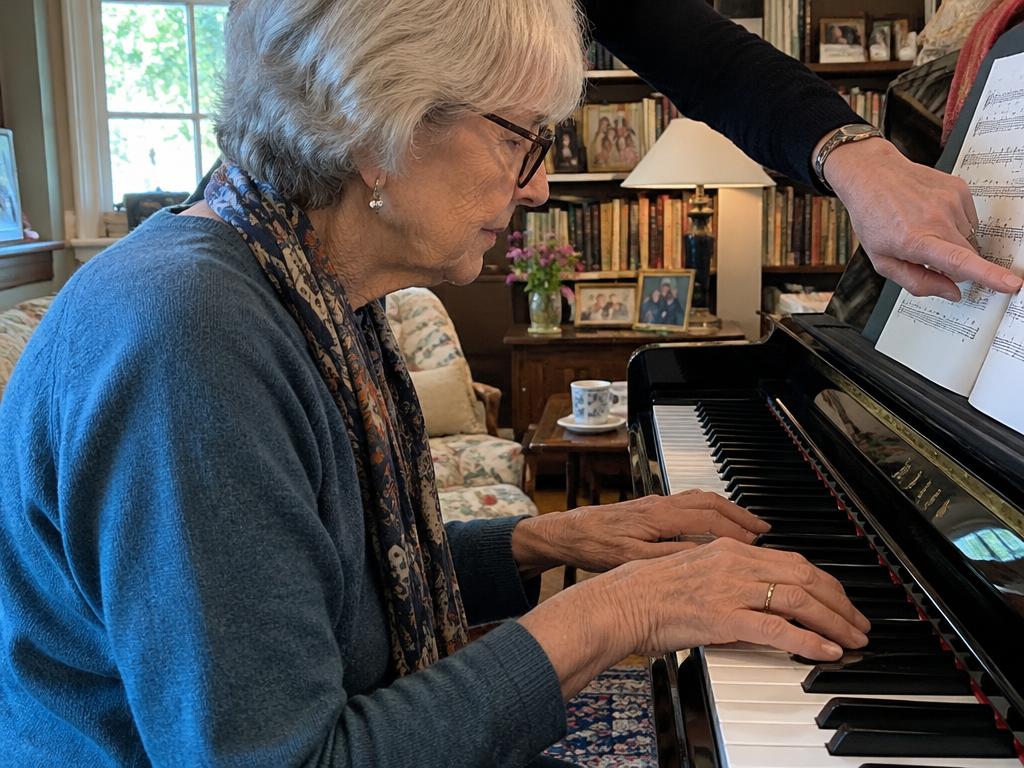
For the person who isn't a joiner, a one-on-one lesson is the opposite of a crowded room. A music teacher at the piano that's been sitting unused. A watercolor lesson at the dining table. A weekly chess game with someone who actually plays well. The attention is entirely on them.
For the person with hearing loss, one teacher across the table, in a quiet room, at a pace that suits them, removes most of what made the group setting so tiring.
For the person who doesn't want to be "a senior," frame it as a lesson. Nobody objects to having a piano teacher, an art teacher or a trainer. People of every age hire them. That framing is honest, and it lets people keep their dignity.
For the person who loves games but lost their group, a pro can bring Mahjong or Canasta to the house and teach. Those games need four players, so the family or client sets up the table with friends or neighbors, and the pro brings the set and runs the game. Those two require booking at least four visits so the group gets a real run at it. Chess and bridge work differently, and chess in particular is often just a good weekly game with a real opponent. See board and card games.
For the person who misses being outside, a gardener can come and help with raised beds, containers or houseplants, set up so no one has to kneel.
For the person staying close to a spouse, an activity at home means they never have to leave. Some couples take a lesson together.
For the person who is grieving, a personal storytelling session can be meaningful. A guided conversation about their life, recorded for the family. Some pros help turn it into a short film or a printed book. It isn't therapy, and shouldn't be presented as such. It's a chance to tell the story while someone listens closely.
How to raise it without another argument
If you've already had the senior center conversation and lost, don't open with a new program. Open with a question.
"What did you used to do on Saturday afternoons?"
"Is there anything you always meant to learn?"
"If someone came here once a week and taught you something, what would you pick?"
Then let the answer lead. If it's "nothing," try going through the list out loud. People often say no to the idea of activities and yes to a specific one.
It also helps to get the family involved early. An adult child can browse profiles, message a pro with questions, and book a single visit to try it. If it doesn't click, no harm done. If it does, they can switch to four weeks at the same time, or every week until they cancel.
Things to check before the first visit
- Is there a quiet place to work: a table, a chair with arms, a bit of floor space for yoga or training?
- Does the person know who is coming and when? Surprises go badly.
- Is someone available to be there for the first visit, if that would help them feel comfortable?
- For training, has their doctor or PT cleared them for exercise? Our trainers adapt to the person, but they aren't a medical service.
After each visit, the pro writes a short note the family can read. That makes it easier for you and the family to see whether it's working, without the client having to report on it.
It doesn't have to replace the senior center
Some clients start with a lesson at home and, months later, decide to try a class at the center after all. Some never do. Either is fine. The goal was never to get them into a particular building. It was to make sure the week has something in it worth getting up for.
A next step
If you have a client in mind, have the family look through in-home activities for their town and pick a couple of pros to message. To read more about why we think this matters, see why it matters.
Related activities
- Board and card gamesMahjong, bridge, canasta, or someone to play a real game of chess with.
- Music lessonsLearn an instrument, sing favorite songs or explore music at your pace.
- Personal storytellingA guided conversation about your life, recorded for your family. Old photos welcome.
- Personal trainingBuild strength, balance and confidence with movements chosen for you.
Find a local pro
Checked and vetted professionals who teach at home across Essex County.
Browse professionals