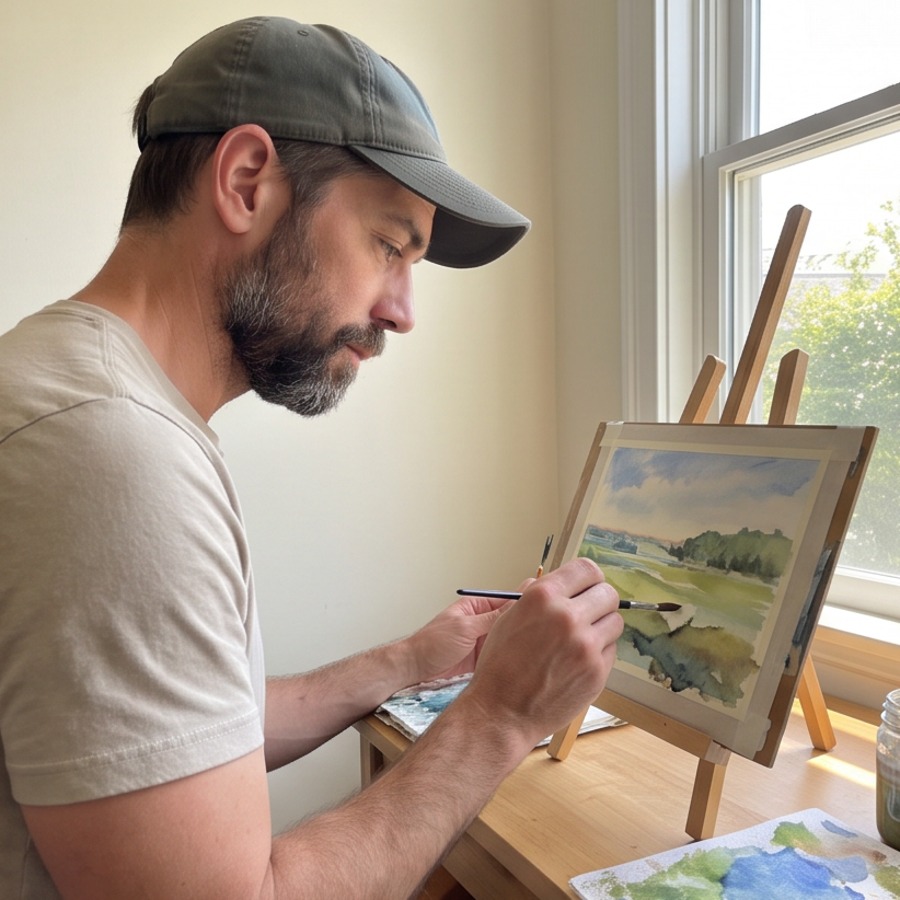
 $110 / hr
Art lessons + 1 more
Tomas Silva
5.0(4)Architectural sketching and watercolor
Millburn
Mon · Wed · FriBackground checked
Essex County, NJ
Learn drawing, watercolor and other art techniques at home. A local pro comes to the house and teaches at your pace, whether it is for you or for Mom or Dad.
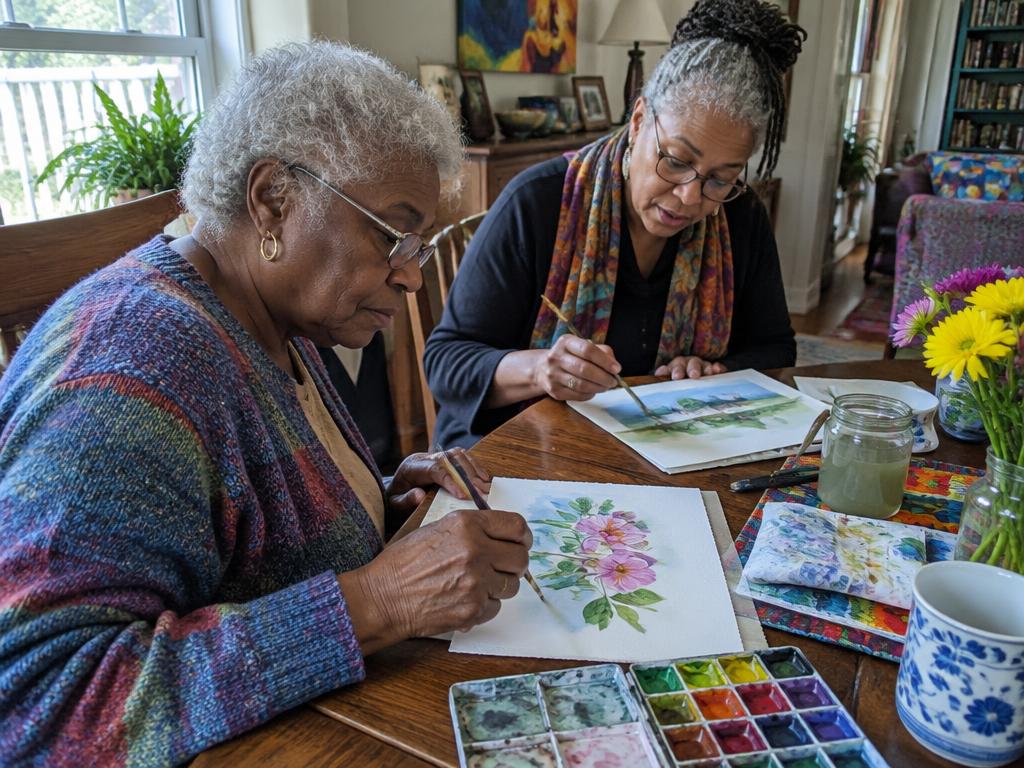 $110 / hr
Art lessons + 1 more
Architectural sketching and watercolor
Millburn
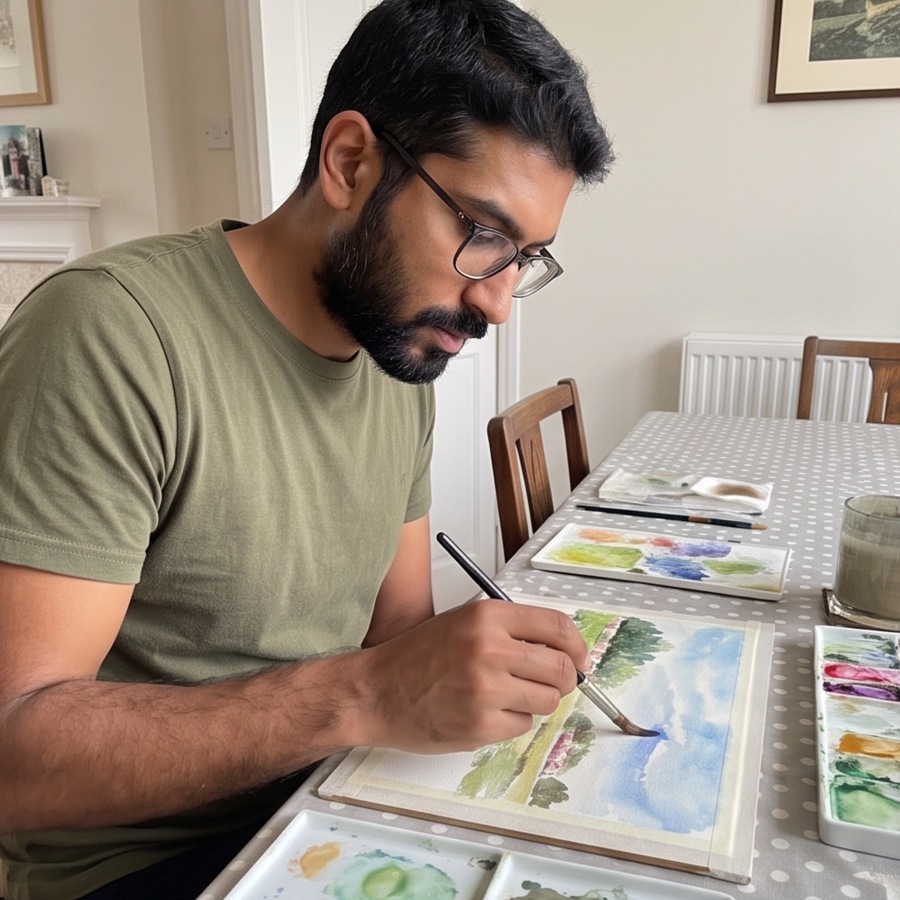 $115 / hr
Art lessons
Loose watercolor and pen and ink sketching
Montclair
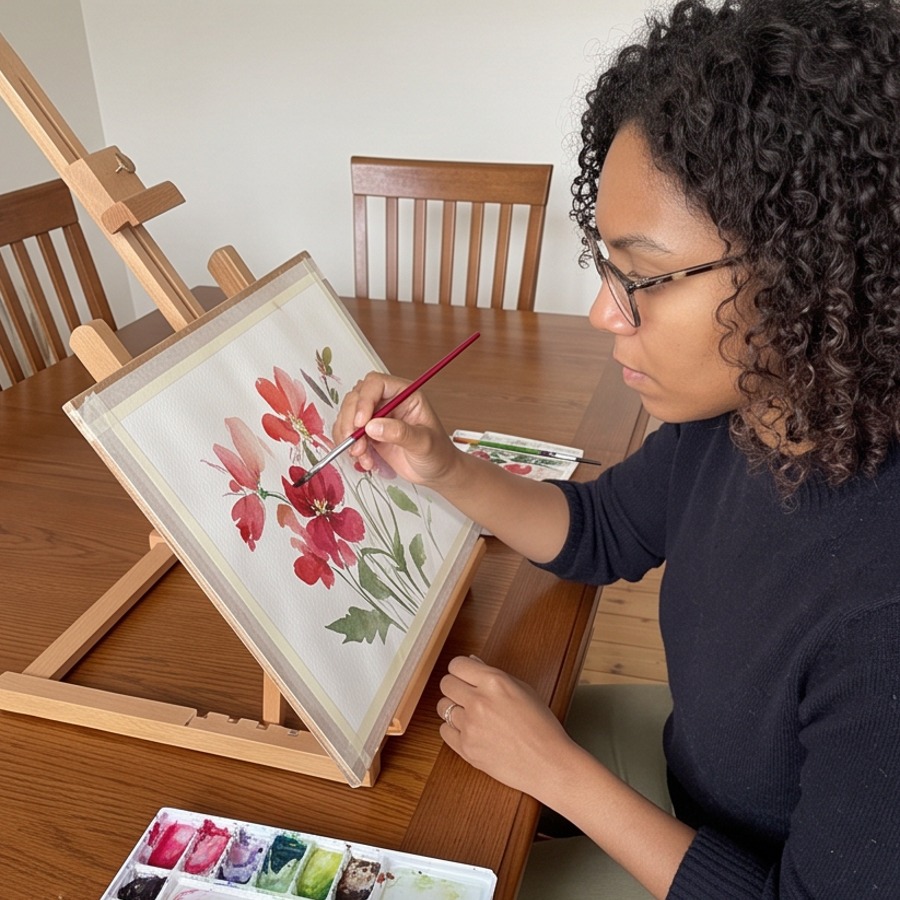 $65 / hr
Art lessons
Watercolor cards, flowers and botanicals
West Orange
 $90 / hr
Art lessons
Acrylic painting and paper collage
Bloomfield
 $125 / hr
Art lessons
Pen and ink drawing and urban sketching
Wayne
 $95 / hr
Board and card games + 1 more
Beginner watercolor, and bridge for a friendly four
Bernardsville
 $65 / hr
Art lessons
Pencil sketching and simple watercolor scenes
Verona
 $135 / hr
Art lessons
Botanical drawing in colored pencil
Summit
 $85 / hr
Art lessons
Acrylic painting and paper collage
Millburn
 $105 / hr
Art lessons
Portrait and still life in oils
Livingston
 $60 / hr
Art lessons
Loose watercolor landscapes and flowers
West Orange
 $55 / hr
Art lessons + 1 more
Loose watercolor landscapes and flowers
Maplewood
 $52 / hr
Tech help + 1 more
iPhone, iPad, video calls and photos
Roseland
Most art teachers arrive with a bag: paper, a few brushes, pencils, a small watercolor set, maybe a board to tape the paper to. They will ask where the light is best and set up at the kitchen or dining table. Then they ask what you are drawn to. Flowers, birds, the view out the back window, old family photos, the dog asleep on the rug. That answer shapes the whole hour.
A first lesson usually mixes a short warm up (loose lines, shading a simple shape, mixing three colors just to see what happens) with one small finished piece. A watercolor lemon. A pencil sketch of a coffee mug. Something with a beginning and an end, so there is something to put on the fridge when the teacher leaves.
Nobody is graded. Teachers hear "I can't even draw a straight line" all the time, and they have a way in for that person.
Art lessons suit people who like quiet focus, people who used to make things with their hands (sewing, woodworking, decorating the house every holiday), and people who always meant to try and never had the time. It is also a good fit for someone whose days have gotten a little smaller. Painting the backyard maple through the seasons gives a reason to really look at it.
Watercolor can frustrate perfectionists at first, because water goes where it wants. Those folks often prefer pencil, colored pencil or pen and ink, where every mark is under control. Someone with a tremor may find loose brushwork, pastels or collage more satisfying than fine detail. Someone with low vision may enjoy bold acrylics on bigger paper. Tell the teacher what is going on and let them suggest a starting point.
Not much. A table you do not mind getting a little paint on, an old towel or vinyl tablecloth, two jars for water, paper towels, and a good lamp if the room is dim. A chair with real back support makes a big difference over an hour or two.
Bringing supplies is common, especially for the first few lessons. Check the profile or ask in a message. Once you know what you like, the teacher can give you a short list so you are not buying a 120-piece set that sits in a closet. Keep a folder or flat box for finished work. Flipping back through it after a month is more motivating than any pep talk.
Early weeks are about tools: how much water to put on the brush, how to hold a pencil for shading versus detail, how to look at the actual shape in front of you instead of the idea of it. Around week three or four, people start to see differently. Shadows have color. A tree is not green, it is six greens.
By weeks six to eight, most students have a small stack of finished pieces and a clear sense of what they enjoy. Some want to keep going with landscapes. Others find they love drawing faces from family photos. Teachers sometimes suggest a small project to work toward, like a set of hand-painted holiday cards or a sketchbook of the garden through one season.
If you are booking for a parent from far away, the visit notes are your window into all this. You will read that she finally got a wash of sky to dry without blooms, or that he spent the whole hour on one stubborn pear and loved it. Ask her to hold up the week's painting on your next video call. It gives you both something real to talk about, and a little audience is good motivation to keep going.
You do not have to leave the house to have good subjects, but the county helps. The cherry blossoms at Branch Brook Park in April, the irises at Presby Memorial Iris Gardens in Montclair in late spring, the lake at Verona Park on a calm morning. Snap a photo on a walk or a drive and the teacher can work from it at the kitchen table.
A trip to the Montclair Art Museum can spark ideas too. Bring home a postcard of a painting you liked, and ask the teacher to help you try that artist's palette or style in a small study. It is a nice way to connect what you see on the wall with what you are learning to do yourself, and it gives you something to talk about besides your own paintings.
Look at what each teacher lists: drawing, watercolor, acrylics, pastels. Read reviews for words like patient and encouraging. In your message, be specific: "My father wants to paint birds from our feeder and has never painted. Where would you start?" "Do you bring supplies?" "Can you work around a hand tremor?" How they answer tells you a lot. Contact details stay private in messages.
Teachers set their own hourly rate from $50 to $150, and visits are 1, 1.5 or 2 hours at that rate, plus a $2.50 booking fee and a 10% service fee at checkout. Art is one activity where 1.5 hours often makes sense, since setup and cleanup take time and paint needs to dry between layers. Book one visit, 4 weeks at the same time, or every week until you cancel. Cancelling is free up to 3 days before, 50% between 3 days and 12 hours, and full price inside 12 hours. Homes 20 or more miles from the teacher add a $25 travel fee per visit.
None. Teachers start exactly where the student is, and many of their students have not picked up a brush since grade school. The first lesson is usually a relaxed warm up and one small, finished piece. Confidence tends to show up around the second or third week.
Many teachers bring supplies, especially for the first lessons, and their profile or a quick message will tell you. Later, once your parent knows which medium they like, the teacher can suggest a short shopping list so you only buy what will actually get used.
Yes, and many enjoy it. Loose watercolor, pastels, collage and big brushwork are forgiving of shaky lines. A teacher may also suggest thicker pencil grips or taping paper to the table. Mention the tremor in your first message and ask how they would approach it.
Pencil drawing is the simplest to set up and the easiest to control. Watercolor gives quick, pretty results but behaves unpredictably at first. Many teachers start with a bit of both so the student can feel which one they enjoy, then build from there.
Less than you would expect. Pencil and colored pencil make no mess at all. Watercolor needs two jars of water and a towel. Acrylics are a little messier, so a vinyl tablecloth helps. Teachers usually help set up and clean up within the visit.
Yes. Drawing or painting from a favorite photo is a popular project, and it gives the work real meaning. Set aside a few photos with clear faces or scenes before the lesson. The teacher can help choose one that is a good fit for the student's current skill.